A few months ago, a coworker finished a project in twenty minutes that used to take most of us an afternoon. It’s not because others were dumber than her. Rather, she was smart enough to know how to use AI tools to finish tasks that the rest of us were procrastinating on.
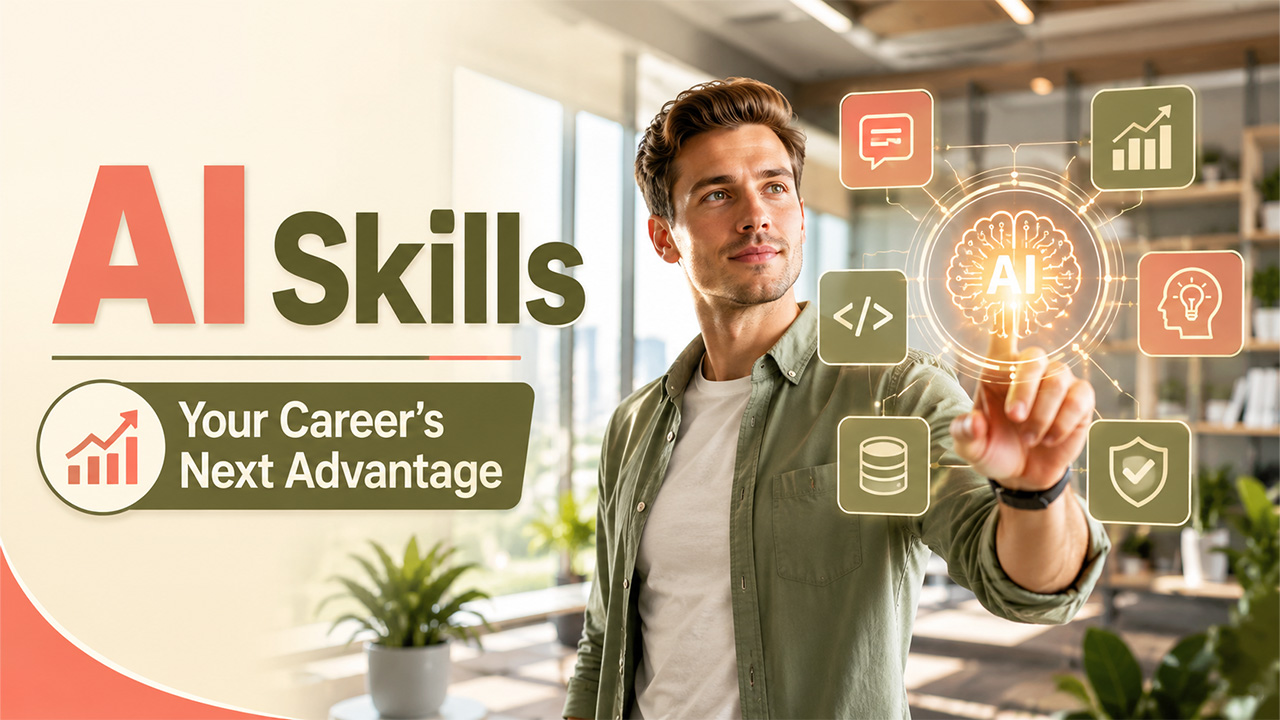
This is what is happening across workplaces right now. AI is shifting the ground, quietly. Earlier, AI skills used to be something that only engineers or data teams had to worry about. However, in 2026, they’re starting to feel as basic as knowing how to use email or a spreadsheet. It is not optional anymore; it’s just expected of you. And people are wrong to think that mastering one AI tool would be enough. The tools themselves will keep changing. So, what actually matters is building the kind of thinking that lets you keep up no matter what comes next.
Let’s break down what AI skills are, why they matter, and which ones are worth your time to prepare you for the future.
What Are AI Skills?
AI skills are the abilities that let you understand, use, build, or work alongside artificial intelligence tools. That’s a broad definition on purpose, because AI skills aren’t one single thing. A software engineer training a machine learning model needs a completely different skill set than a marketing manager for writing better prompts for a chatbot. Both count as AI skills and both matter.
Broadly, these skills fall into two categories:
| Type | What It Involves | Who Typically Needs It |
| Technical AI Skills | Building, training, and maintaining AI systems, like coding, data modeling, and algorithm design | Engineers, developers, data scientists |
| Non-Technical AI Skills | Using AI tools effectively, thinking critically about outputs, applying AI responsibly | Marketers, managers, customer service teams, basically everyone else |
Neither is more important than the other. Even a good AI model is useless if nobody knows how to use it well, and a great prompt won’t fix a poorly built model. Both need each other to actually work.
Why AI Skills Matter for the Future of Work
It’s easy to treat “learn AI skills” as generic career advice, the kind of thing that sounds nice but doesn’t really change how you think about your job. So, let’s get specific about why this actually matters right now.
Companies Need More AI-Skilled Talent:
Most businesses now are more than willing to incorporate AI into their workflows. However, they struggle to find employees who know how to make it work well without being completely dependent on AI tools.
AI Is Moving Beyond Tech Teams:
AI tools are being used everywhere, from sales and HR to business operations and customer service. This means that AI fluency isn’t a specialist skill anymore; it has become a necessity if you want to land a high-paying job in AI-powered workspaces.
AI Is Changing Jobs, Not Just Replacing Them:
Human roles are not disappearing as fast as headlines suggest. However, they are definitely changing shape, and people without AI skills risk getting left behind in the same role.
Early AI Adopters Are Gaining an Edge:
The gap between employees who use AI well and those who don’t is becoming real. The difference is visible in their quality of output and speed.
However, it doesn’t mean that you have to become a data scientist overnight. It just means that AI fluency is quietly becoming more important. The people who get comfortable with it early are preparing themselves to take lead in the future.
10 Essential AI Skills to Learn in 2026
From building AI systems to using them effectively, these skills span both technical and everyday workplace needs.
5 Technical AI Skills Worth Learning
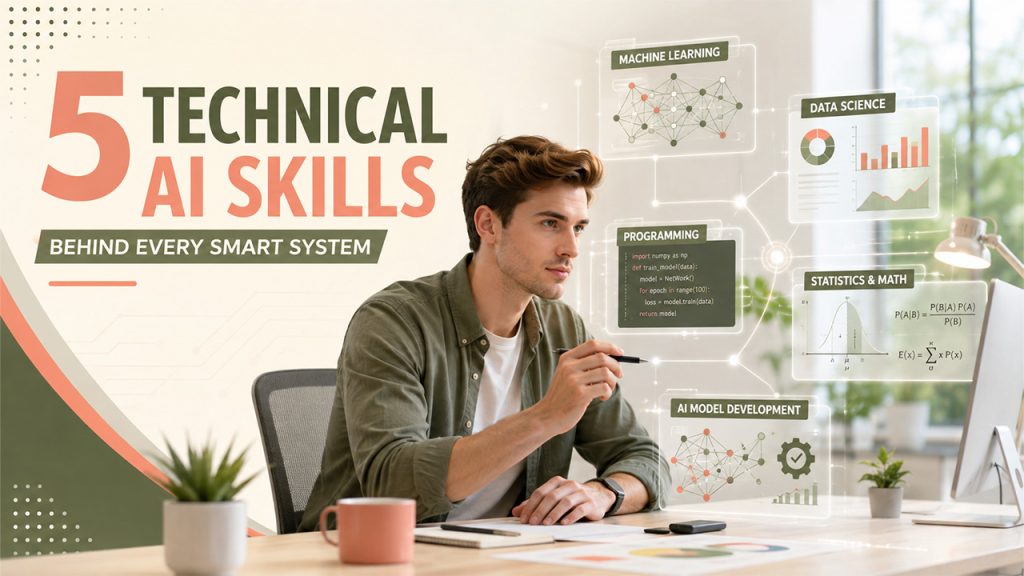
These skills work behind the scenes. They actually build and maintain the AI systems that everybody else relies on.
Machine Learning
This is the foundation of most AI tools you interact with. It involves creating and testing algorithms that let systems learn from data instead of following fixed rules. Example: a machine learning model that improves fraud detection by analyzing and learning from past transaction patterns.
Data Science and Analytics
AI needs a huge volume of data to work. This skill helps you understand what data an AI model is using, how it comes to conclusion, and whether you can actually trust the results or not. For instance, a data analyst checks whether a hiring algorithm is pulling from biased historical data. The more data, the more accurate the results.
Programming Languages
To build, adjust, and maintain AI tools, you need to code. Python and Java remain the most common choices for AI models. However, some teams also work in C++ or Scala, which makes learning a programming language a necessity. Example: a developer uses Python to fine-tune an open-source language model for a company’s internal chatbot.
Statistics and Math
Numbers sit underneath everything AI does. Knowing how to interpret probability, patterns, and error rates helps teams understand not just what an AI tool concludes, but how confident they should be in it. Example: calculating the margin of error in an AI-generated sales forecast before presenting it to leadership.
AI Model Development
Every AI model is built a little differently depending on its purpose. This skill covers designing, testing, and refining models, so they actually solve the problem they were built for. This is closely tied to how AI Agents are built, since both rely on models that can adapt to specific tasks and goals. Example: adjusting a recommendation model after noticing that it keeps suggesting the same five products to everyone.
5 Non-Technical AI Skills Everyone Can Build
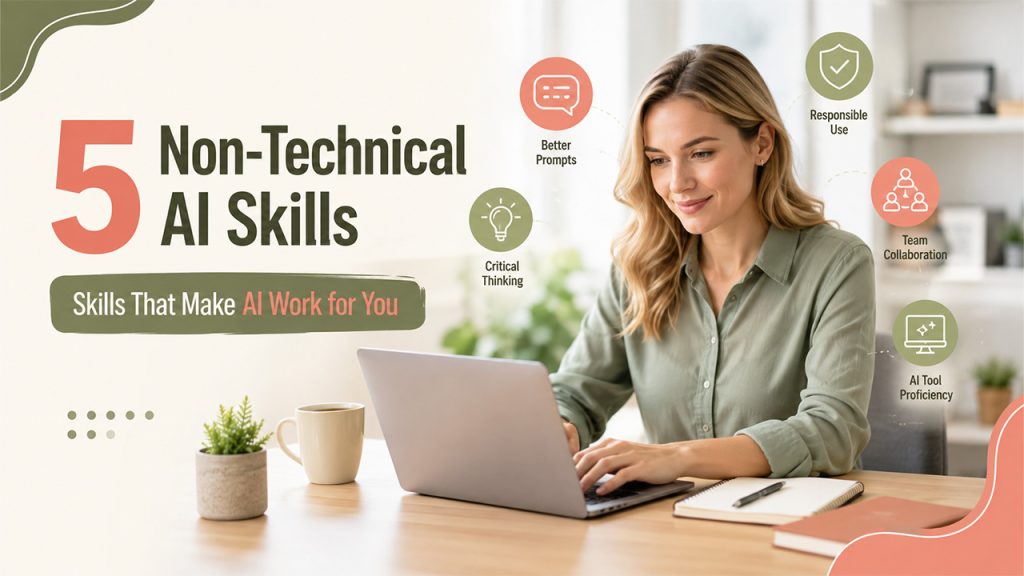
Not all AI skills need you to write code to get real value from them. In fact, most people in most jobs will lean on this list far more than the technical one.
AI Tool Proficiency
It might sound like a big deal, but it’s just knowing your way around common AI tools to use them to their full potential. This matters just as much for individuals as it does for companies exploring AI Tools for Small Businesses to stay competitive. It is not just about using them once, rather understanding how to get consistently better results out of them. For instance, a project manager who knows exactly which AI tool to use to summarize meetings and draft content without making it sound AI-generated.
Prompt Engineering
AI can produce pretty good content; however, it needs clear and well-written instructions to generate the right content. This skill revolves around asking better questions to get better answers. For example: rewriting a vague and generic prompt like “write about marketing” into a specific and detailed one can produce a usable first draft.
AI Ethics and Responsible Use
As AI is increasingly used in decision-making, it has become essential to ask harder questions about its fairness, privacy, and accuracy. Companies need people who can ensure accurate data sources and data privacy. Example: flagging that an AI screening tool seems to favor certain resume formats over others for no good reason.
Critical Thinking with AI
AI can sound confident even when it’s wrong, and it naturally doesn’t flag its own mistakes. That’s why companies look for people who can identify when AI is wrong, even if the answer looks polished and dig deeper to verify facts. For example, double-checking an AI-generated financial summary before it goes into a client report.
Cross-Functional Collaboration
AI tools rarely work in isolation. They need input from more than one team to actually work as per business requirements. When tech, operations, and marketing stay in sync about how a tool is being used, it improves faster and causes fewer surprises. An example includes a customer service agent and an IT team working together to fine-tune a support chatbot’s tone and accuracy.
How to Build AI Skills From Scratch
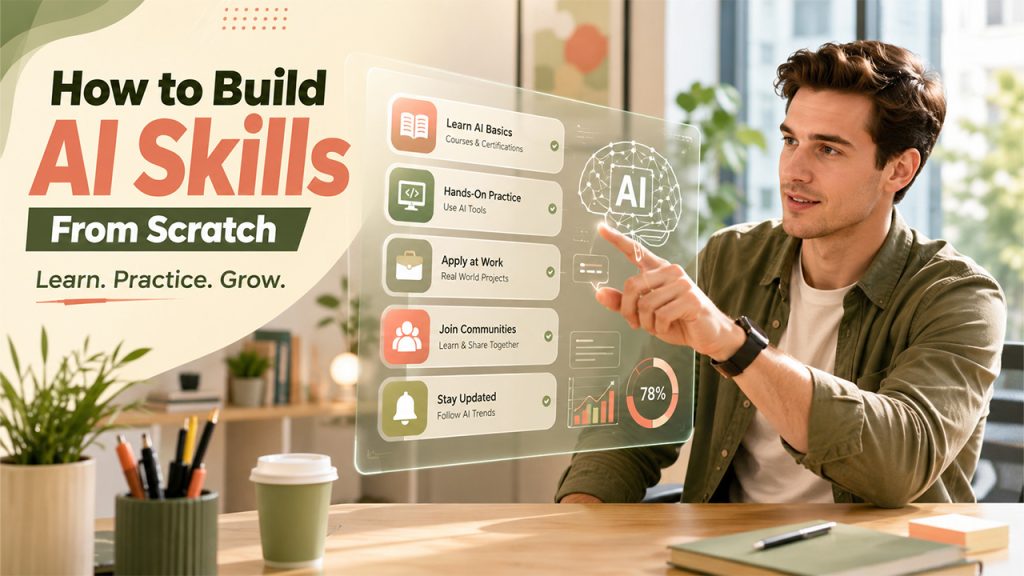
You don’t need a computer science degree to learn AI skills. You can build these skills using small, practical ways. Here’s how you can start:
Take AI Courses and Certifications:
There are platforms like Coursera, Trailhead, or even YouTube that offer both free and structured crash courses that allow you to learn AI fundamentals at your own pace without any pressure or a fixed schedule. You can just pick what you want to learn and move at whatever pace actually works for you.
Build AI Skills Through Hands-On Practice:
You can read ten articles about prompt engineering, but it won’t be of much use. When you actually open ChatGPT or any other AI tool and practice, it’ll teach you more than theories ever could. It’s the difference between knowing about something and knowing how to do it.
Learn AI Skills on the Job:
If your company is already using AI tools for customer support or coding, ask to get involved and learn from it. It’s often easier to learn how to implement AI in business through real work tasks than through a course sitting untouched in your browser tabs.
Join AI Learning Communities:
Spaces like Reddit’s AI subreddits, Discord servers, or LinkedIn groups are full of people troubleshooting the same problems you’ll run into and sharing their learning experiences. Usually someone has already solved the exact issue you’re stuck on.
Stay Current With AI Trends:
AI tools update constantly, so a feature you learned last month might already work differently. A quick weekly scroll through AI newsletters or tech news keeps you from falling behind without much effort.
The good news is that none of these paths require you to quit your job or start over. You can build AI skills while having a job with an hour of practice here and there.
Conclusion
AI skills in 2026 aren’t about mastering every new tool that comes out. They are about building a foundation that lets you adapt to any tool and as those tools change over time. The specific software or tool will look or behave differently in two years. However, if you stay curious, keep practicing, and stay comfortable with learning new things, you will do just fine. It is less about becoming an AI expert and more about becoming someone who isn’t afraid to use AI.
Whether you learn technical or non-technical, the best time to start building these skills was a while ago. The second-best time is now.
Frequently Asked Questions (FAQs)
Q. What are AI skills?
AI skills are abilities that help you understand, use, or build AI tools. They include both technical and practical skills, like coding, clear communication, and critical thinking.
Q. How do I start learning AI skills?
Try free tools, take a beginner course, or join AI use at work. Hands-on practice usually teaches you faster than reading alone does.
Q. Which AI skills are most in demand right now?
Prompt engineering, AI tool proficiency, and critical thinking top the non-technical list. On the technical side, machine learning and data science remain highly sought after.
Q. Do I need coding skills to work with AI?
No. Many valuable AI skills, like prompt engineering or ethical evaluation, require zero coding. Coding matters more if you’re building or maintaining AI systems directly.
Q. Will AI skills replace the need for other job skills?
Not really. AI skills work best alongside existing expertise. They’re meant to sharpen how you do your job, not replace the judgment and experience you already bring.