
Artificial Intelligence isn’t just a futuristic concept anymore — it’s everywhere, changing the way businesses run right now. From streamlining repetitive workflows to accelerate informed decision-making, it fosters businesses to rely less on intuition-based choices and more on real, solid data. What started out as experimental technology is now a core operational driver, pushing processes forward. Businesses that build AI into their workflows report measurable results: faster speed, fewer errors, and efficient cost effectiveness.
That’s exactly what AISuites for Business is built for; one workspace that brings AI-powered chat, content, video, and automation tools together so teams can actually get things done without switching between platforms.
Here’s what this blog will cover: how AI is flipping the script on business operations, the specific areas where things are really changing, and why AI in business operations really matters for organizations of all sizes.
What does AI in Business Operations Actually Mean?
AI-powered business operations refer to the use of artificial intelligence technologies such as machine learning, natural language processing (NLP), and predictive analytics — to streamline, automate, and optimize how a business functions day to day.
Unlike standard software that sticks to fixed instructions, AI tools learn from data, adapt as it goes, and can manage complex tasks with minimal human intervention. This makes it especially valuable for handling large-volume workloads, identifying hidden trends, and minimizing manual work across departments.
Key AI technologies driving this shift include:
- Machine Learning: Analyze data to spot patterns and anticipate business outcomes.
- Natural Language Processing (NLP): Lets software understand and respond to human language.
- Robotic Process Automation (RPA): Handles tedious, rule-driven tasks without the need for constant oversight.
- Predictive Analytics: Forecast trends and business results based on historical data, such as past purchase records.
- Computer Vision: gives machines the power to interpret and act on images and visuals
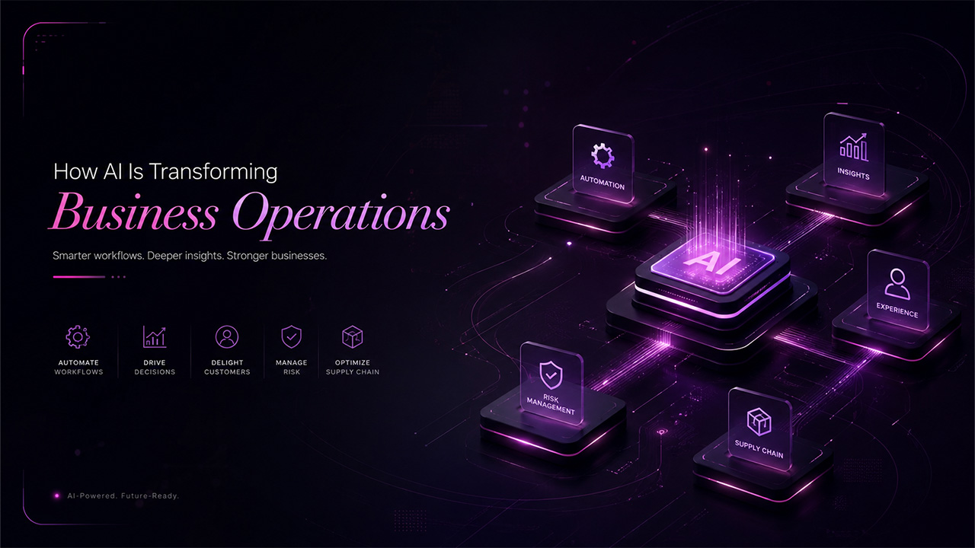
How AI Is Transforming Business Operations: Key Areas
1. Workflow Automation and Process Efficiency
AI’s biggest impact on business starts with automation. It eliminates those time-consuming, manual tasks nobody really wants to do—like data entry, invoice processing, and routine reports. Instead of spending hours on manual tasks, AI workflow automation emphasizes employees to focus more on strategic, high-value tasks.
If you’re seeking to get started, workflow automation with AI is a great entry point. The good news? You don’t have to rebuild your entire business. AI can make things smoother by seamlessly integrating into your current processes without needing to start from scratch.
Key areas where automation delivers results:
- Finance: AI streamlines invoice processing, reconciliation, and expense tracking.
- HR: It screens candidates and streamlines onboarding to make hiring quicker and easier.
- Supply Chain: AI predicts demand and manages routing, keeping things on track.
- Operations: AI in business operations automatically generates and schedules reports, cutting down on tedious work.
2. Data-Driven Decision Making
AI isn’t just fast—it’s lightning fast. It processes high volumes of data faster than any human team could. Predictive analytics spots trends and patterns early and delivers insights that help make better decisions about inventory, marketing budgets, and more.
This power changes how businesses operate. Instead of scrambling to fix problems after they occur, businesses can anticipate them and act fast. Real-time data analysis means plans are smarter, more accurate, and risks are easier to handle.
3. Customer Experience and Support
Modern customers expect fast, personalized, and consistent service. AI for customer service addresses this gap directly:
- AI-powered chatbots and virtual assistants handle high volumes of queries around the clock, cutting wait times significantly
- Sentiment analysis tools monitor interactions in real time and flag dissatisfaction before it escalates
- Personalization engines use purchase history and behavioral data to tailor recommendations to individual customers
- Omnichannel integration gives people a seamless experience, whether they are emailing, chatting, calling, or tweeting for help.
Companies jumping on AI-powered customer service see higher satisfaction rates, cheaper support costs, and stronger retention over time.
4. Finance and Risk Management
In finance, AI-powered business operations reduce the cost and risk of manual workflows at scale:
- Reconciliation happens instantly, compressing the closing cycle from days to hours.
- Fraud detection tools identify anomalies in real-time, keeping losses in check.
- AI-powered forecasting gets a more accurate budget by continuously learning from the newest data.
- Compliance checks are becoming more frequent, so regulatory risks are less likely.
5. Supply Chain and Inventory Management
Supply chains break down, and it’s expensive. AI’s predictive tools prevent these disruptions:
- Demand forecasting models update inventory based on real-time data, not just based on historical averages.
- Dynamic routing tools ensure faster, cheaper, and more efficient deliveries by cutting transportation expenses.
- Proactive alerts flag potential issues before it derails operations.
- Procurement tools keep stock levels healthy, avoiding over-ordering and waste.
These days, a lot of AI business platforms combine these features in one place, so teams across departments can work together without relying on a bunch of disconnected tools.
Benefits of AI in Business Operations: A Quick Summary
| Benefit | What It Means in Practice |
| Operational efficiency | Fewer manual tasks, faster processing, lower costs |
| Smarter decisions | Real-time data analysis and predictive insights |
| Scalability | Handle higher workloads without proportional cost increases |
| Improved accuracy | Consistent logic applied to every process, fewer errors |
| Better customer experience | Faster, personalized, 24/7 support delivery |
A Detailed Overview:
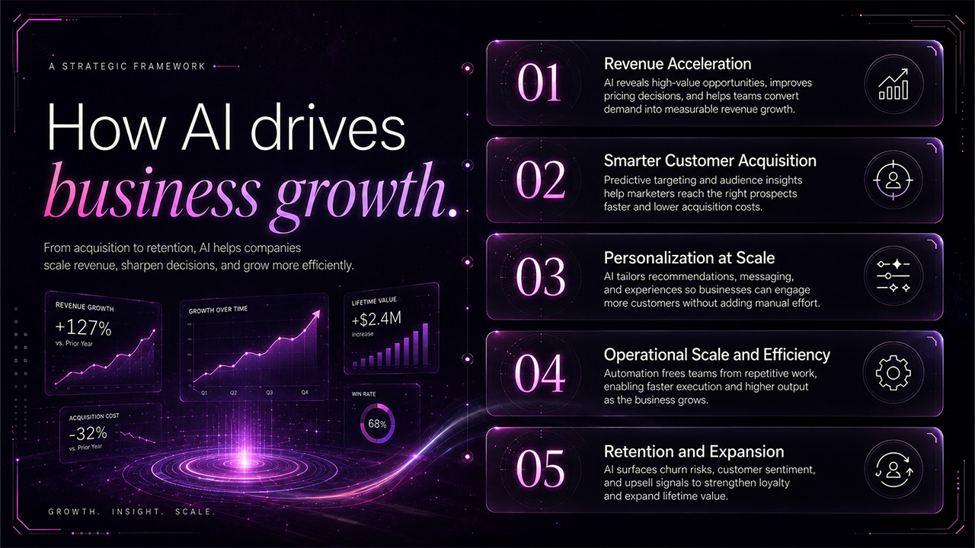
AI is changing the game for businesses in all sorts of ways—it’s not just about automating repetitive tasks anymore. When companies use AI wisely, it transforms how every department works and delivers measurable results.
1. Operational Efficiency
AI in business operations automates repetitive processes like data entry, invoicing, and creating reports. That means your team can stop grinding through manual work and start tackling what really matters. Additionally, AI ensures critical business processes keep running without disruption. You don’t have to worry about missing a beat.
2. Smarter, Faster Decision-Making
Nobody can process high-volume data or spot patterns faster than AI— it’s simply unrivaled. With predictive analytics, leaders get real-time insights about what’s changing and what’s coming. Instead of scrambling to clean up messes after they happen, businesses get ahead of problems before they grow
Scalability Without Proportional Cost
Implementing AI in business processes lets you handle significantly higher workloads without just adding more people—and more expenses—to match. When demand grows, automated systems just scale up to handle it. This flexibility is a big win, especially for businesses planning to grow without inflating their operating costs.
4. Improved Accuracy and Reduced Risk
Automated systems don’t get tired, sloppy, or distracted. AI follows strict logic with every decision and transaction, which reduces error rates in data-heavy areas like finance and compliance. The bottom line: more accurate records and less risk when the auditors show up.
5. Enhanced Customer Experience
AI transforms customer services faster and more personalized. Chatbots resolve issues right away, recommendation systems get smarter and more personal, and sentiment analysis identifies signs of frustrated customer early —sometimes before they say a word. Result? You end up giving customers a tailored, responsive experience without hiring professional support staff.
Challenges to Consider Before Adopting AI
While the case for AI is strong, adoption comes with real challenges that organizations should address early:
- Data quality: AI systems are only as reliable as the data they consume; poor input leads to poor output
- Skills gap: Your team might need extra training or even new hires to manage and understand AI insights.
- Legacy system integration: Traditional systems can struggle to connect with new AI tools. Integration can take real work.
- Ethical considerations: Issues like bias, data privacy, and transparency aren’t “set it and forget it”—they need constant attention.
- Initial investment: The upfront costs can sting, but with a clear vision and smart planning, long-term ROI usually make it worthwhile.
Addressing these factors early means you’re setting yourself up for AI that’s actually reliable, scales easily, and makes a real difference
How to Implement AI in Business Operations Successfully
Adopting AI doesn’t require a complete business transformation. A strategic approach helps organizations improve efficiency, reduce manual work, and achieve better results with minimal disruption.
Identify Areas That Consume Time
Start by identifying repetitive tasks such as data entry, reporting, customer support, or scheduling. These processes often deliver the fastest return on investment when automated.
Organize Your Data
AI systems rely on accurate and structured data. Before implementation, ensure your business information is clean, accessible, and regularly updated to support reliable outcomes.
Select Solutions That Match Business Goals
Choose AI tools based on your specific objectives, whether it’s improving productivity, enhancing customer service, streamlining workflows, or creating visual content with AI image solutions. Selecting tools that align with business needs increases the likelihood of successful adoption.
Prepare Employees for Change
Provide employees with the training and resources needed to work effectively alongside AI-powered systems and workflows.
Track Results and Adjust
Monitor key metrics such as efficiency, operational costs, and customer satisfaction to evaluate performance and identify opportunities for improvement.
Expand Strategically
Once AI proves successful in one area, gradually extend its use across other departments to maximize business value and support long-term growth.
Frequently Asked Questions :
1. What does AI in business operations mean?
It’s about using AI tech—machine learning, natural language processing, and automation tools—to run, improve, or even fully automate operations of your business. Such as HR, finance, customer support, supply chain management, and more.
2. How does AI workflow automation differ from traditional automation?
Traditional automation follows fixed, pre-programmed rules. Workflow automation with AI goes further — it learns from data, adapts to changing conditions, and handles more complex, variable tasks without manual reprogramming.
3. What are the main benefits of AI in business?
The primary benefits of AI in business operations are less operational costs, quick processing, fewer error risks, better data-driven insights, and personalized customer experiences.
4. Is AI for customer service reliable for handling complex queries?
Yes. Most AI tools can handle high volumes of common questions quickly and accurately. When things get complicated, it sends the case to a human agent. You get speed where it makes sense and a real person when it matters.
5. How do I choose the right AI assistant for business operations?
The right AI assistant depends on your business requirements, budget, and workflow complexity. Businesses comparing leading AI models can review our Claude vs ChatGPT guide to understand the strengths and ideal use cases of each platform before making a decision.
Conclusion
AI is shifting how businesses compete, help customers, and run their day-to-day operations at every level. From eliminating manual work with smart automation to keeping support available round-the-clock, you see the results everywhere—HR, finance, supply chain, customer experience, and beyond. Getting started with AI isn’t just a tech upgrade. It’s a solid investment in your company’s ability to grow, adapt, and stay ahead as AI keeps evolving. Businesses that adopt AI in business operations now are setting themselves up to lead the way.
If you’re looking to integrate AI in your company’s workflow, you need a plan that actually fits your business goals. When businesses, whether they’re just starting out or already big players, weave AI into their daily operations, they end up working smarter and making better decisions. Plus, they stand a better chance of keeping up as technology keeps changing the marketplace.