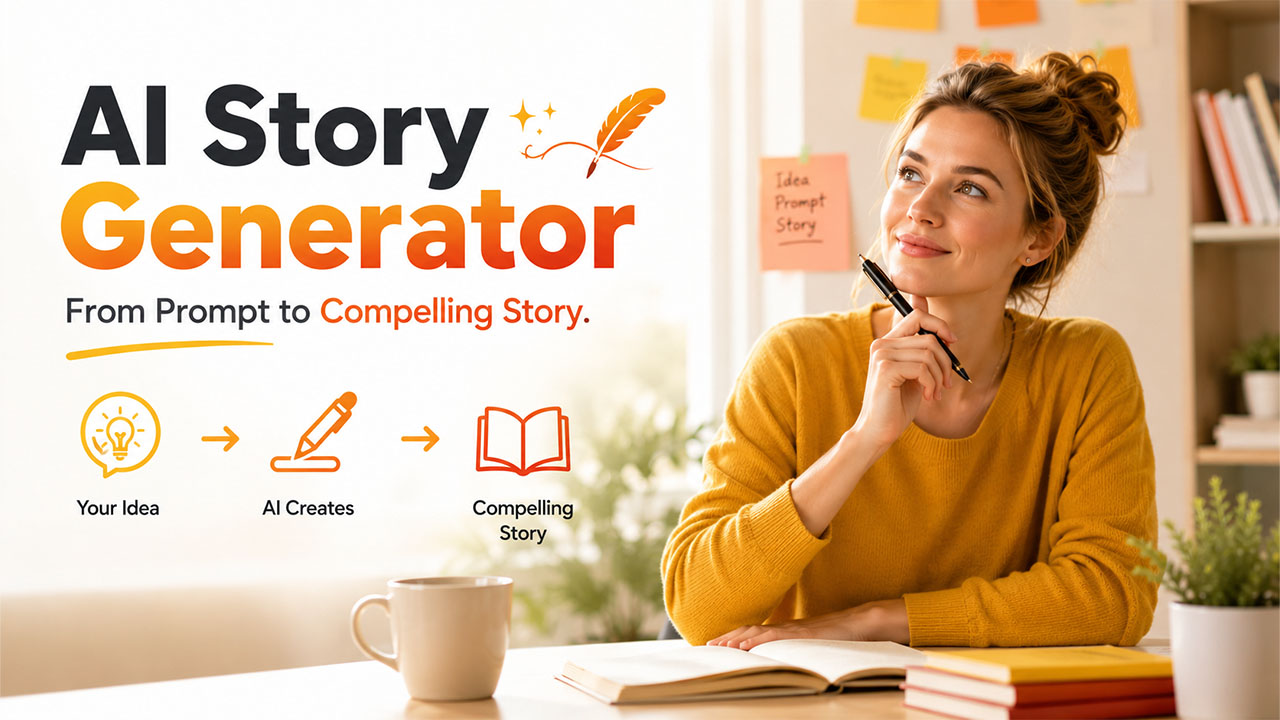
Content timelines have reduced across all industries, and writers are now under consistent pressure to create fresh content without compromising quality. This is exactly where the AI story generator becomes valuable genuinely. Instead of staring at a blank page, a writer can enter a character’s detail, theme, or short prompt and get an organized draft in seconds. These tools are not here to replace genuine human creativity, but it does help with writer’s block and the friction a writer feels when starting from point zero. In this blog, we will learn what an AI story generator is, its advantages, and how different users can use it in their routine work.
What Is an AI Story Generator?
An AI story generator refers to a writing tool powered by LLM models that creates original narrative content based on a user’s prompt. Instead of creating a story line by line, the writer presents an idea, and the tool provides you with a workable draft first that can be shortened, refined, or expanded.
Most tools in this category have a few traits in common:
- Input based on prompt, where a single or more than one sentence is sufficient to create a complete narrative.
- The flexibility of genre across children’s stories, fiction, scripts, and brand narratives.
- Editable output means content can be used as a good starting point, not as a finished product.
- Quick turnaround, generally creating a usable draft within a few seconds.
How Does an AI Story Generator Operate?
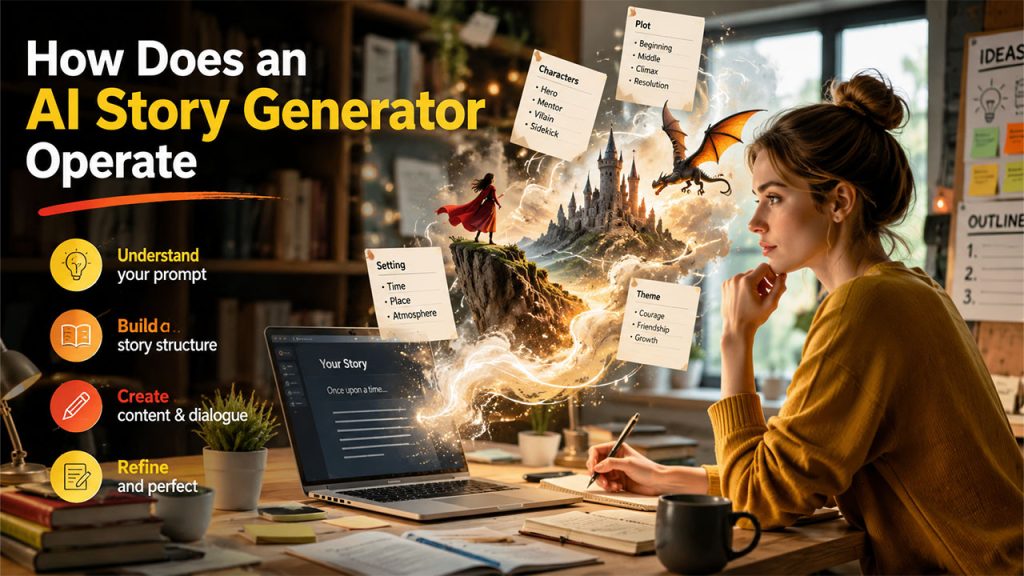
In the background, an AI story generator depends on a language trained with large data of text to predict contextually appropriate or coherent sentences. Once the prompt is submitted, the tool often follows the following steps:
- Assesses the genre, tone, and important details mentioned in the prompt.
- Develops a narrative structure having a beginning, middle, and end.
- Creates description, dialogue, and pacing aligned to the needed style.
- Creates an editable text that can be refined or regenerated until it fits.
Platforms created around broader AI content generation often integrate story telling with editing and formatting support. Thus, the output is a lot closer to being genuinely ready for use instead of requiring a complete rewrite.
Benefits of Leveraging an AI Story Generator
Utilizing an AI story generator can be advantageous of story writers in different kind of ways:
- Saves time on first drafts, outlines, and story beginners.
- Helps in managing writer’s block by giving you a good starting point.
- Helpful for marketers creating brand narratives, teachers preparing materials for different classrooms, and independent writers exploring distinct ideas.
- Ascertain quick experimentation with tone, genre, and structure before providing a final direction.
- Reduces the time gap between getting an idea and having something valuable on the page.
Practical Applications
An AI story generator is not only useful for fiction writers only. Practically, it gets shown across distinct roles:
- Content Marketers — Developing brand stories, product narratives, and social captions.
- Educators — Generating short stories relevant to the age of students in classrooms.
- Independent Writers — Developing chapters or generating dialogue prompts to work from.
- Businesses — Developing fast narrative content for newsletters, case studies, or internal communications.
For teams working with a broader creative workflow, platforms like Dreamina AI widen this same idea into multimedia storytelling or visuals, so a created narrative does not have to stay limited to text-only.
Getting the Right Results
The overall output quality depends greatly on the input. Follow the below helpful practices:
- Be direct and clear in prompts — including tone, genre, characters, and settings where applicable.
- Review and fine-tune generated content for accuracy of facts, brand voice, and originality.
- Consider the first output as a draft and not as a completed piece.
- Integrate AI drafting with human editing to prevent generic phrasing.
Combining generated text with AI image tools can also aid in converting a written story into a visual narrative for presentations or social posts, repurposing the similar idea into distinct formats.
Frequently Asked Questions :
Is the content generated from an AI story generator ready to publish as it is?
No. It must be considered a first draft and should be reviewed for accuracy, tone, and originality before it gets published.
Can an AI story generator be used to write in distinct genres?
Yes. Most platforms provide support to different genres, including children’s stories, fiction, and brand narratives, though results often rely on how clear and detailed your prompt is.
Do I need to have experience as a writer in order to use a tool?
No. Such platforms are created for general users, and a specific and clear prompt is often sufficient to get a useful draft.
Can an AI story generator be used to save the stories that I manually create?
This mainly depends on the type of tool you are using. Some save drafts to a project’s history for editing later on, while others need the story to be immediately copied, so it is worth checking out the storage policy of the platform.
Can a user use an AI story generator for commercial or professional writing?
Yes, a lot of businesses utilize it for marketing copy, brand narratives, and internal content. The output must still be reviewed for brand tone and originality before commercial utilization.
Conclusion
An AI story generator cannot replace the judgement of the writer. However, it does remove the friction of creating a page from blank. For teams that are facing content requirements frequently, whether that is classroom material, marketing copy, or personal writing projects, this type of tool provides a much quicker path from idea to draft. Platforms like AISuites centralize story creation together with wider content and creative tools, making it simpler to go from a rough idea to a completed piece within a single workspace.